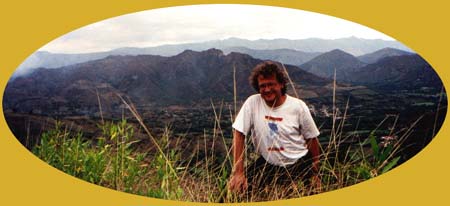


I don't know why, but somehow the volcanos in Ecuador didn't like me. Shortly before I took my flight over to Quito, Ecuador, the two volcanos: Pichincha near Quito and Tungurahua next to Banos didn't feel well, and both started erupting. All American airlines had canceled their flights into Quito. I thought the Europeans will follow soon, but fortunately the European airlines didn't stop flying. So I got over to Quito on October 2nd, and went ahead to Cuenca next morning. The following day the airport in Quito was closed down totally. The volcano was spitting ash all over the Quito area and the people had to walk around with face masks. Supposedly, it looked as if the whole town worked for a hospital. But there was no bigger risk for Quito, because the volcano wouldn't erupt into Quito directly, it would actually go the opposite direction. By mid October things got worse at Tungurahua because the volcano there was sending out hot lava. The whole town had to be evacuated, some 50.000 people. I wasn't one of the tourists who had to get close to these volcanos (besides the risks) so I am not able right now to deliver pictures myself. But I` am going to Chimborazo by mid-November (the highest mountain in Ecuador) and I hope to get lucky and get a clear view over to Tungurahua to shoot some good pictures.
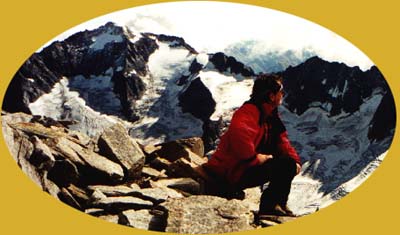
Before I got into Ecuador I didn't read much about the country. The main thing in my mind was the language school. But then, the longer I stayed and the more I read, I realized what kind of adventures and travels the country is offering. It starts with the mountains and well known volcanos, lots of them not too difficult to climb, but reaching up to the 6000 meter level. The mountain area starts at 1800 meters and includes part of the Andes. Then you have the "selva," the jungle. Roughly 2/3 of the area of Ecuador is a tropical rainforest.
Last but not least you find a 100 - 200 km broad stripe
of coast along the east side of the country. So, sometimes just going
50 - 100 km changes totally the nature and landscape. This is probably
best explained by the German scientist Alexander von Humbold, which developed
his theory of "the third dimension," which says, that when you travel
from the equator toward the north and south poles, you will see the same
changes as when you just stay at the equator and move to a higher altitude.
And then there is a fourth vegetation zone, I think the most well known
to foreigners, the Galapagos-Islands. There is no such paradise in the
world, and I am really happy, that I had the chance to visit it. Just
take a look at my report from the Galapagos.
But nothing is for free: language school first
If you want to travel in Ecuador (like in most other places in South America)
you need to speak some Spanish. So, I had no choice. Immediately after
my arrival in Cuenca I went for 3 weeks to language school. I had one-to-one
lessons, and actually, life got really difficult for the 3 weeks. I had
to study much more than I originally thought. At the end I left school
with some survival Spanish, which I have to improve from now on .
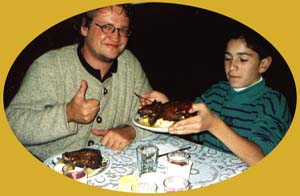
Nevertheless, the school offered a good entry into South America. Every night, we had the chance to participate in either a cooking class, Salsa dancing lessons, or the opportunity to build some ceramic things (which Cuenca actually is famous for). Additionally, I lived with a family, which gave me some further inside into life in Ecuador. On the side you can see a picture when I had dinner with the family, and we ate the Ecuadorian national specialty: Guinea pig
We used the weekends to explore the country further. Once we were on a trip with horses. On the way there, we went over a peak at 4000 meters, and then we rode with the horses up to 3.500 meters. I had some problems with my horse. I and my back-pack weighted together roughly 100 kg, and that was just a little bit to much for that horse. During another weekend I took the bus down to Vilcabamba. Its a small place close to the border with Peru. It has a very nice climate (19 degrees in average), and a very relaxed atmosphere. But it is really famous for its very old inhabitants, supposedly some of them are up to 130 years old. Lots of the scientists have been visiting the place, not much going on there generally, but very relaxed from the very beginning. The last weekend we decided on something really South American.
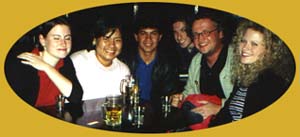
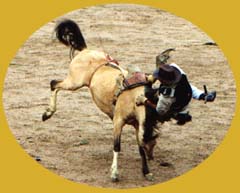
We went to the Rodeo in Cuenca. They have been riding on wild horses and torros. There was a band playing music and there was a really nice atmosphere. However, it started to rain pretty early and pretty heavy. So we had no choice: we had to warm up with the local specialty: Zhumir, which is a terrible mix of Cola and "hardliquor of sugarcane". But it helped! The rain didn't matter that much any more! Before the Rodeo, we were told by some locals to be cautious, and leave (because we are gringos) the rodeo before the end. If not, we could get in trouble with some of the local drunken cowboys. Actually, it was almost the other way around. We resisted the rain and really enjoyed the atmosphere and the rodeo, but some of us couldn't handle the Zhumir and got really drunk. The South Americans on the other hand stayed sober. But the local people generally liked our good mood, and some of them stopped by to personally say good bye to us.
Economic Conditions in Ecuador
The GDP per Capita in Ecuador is at the lower end when compared with the
other countries. But the income per person chart is very skewed. A very
small number of people are earning/having lots of money, the middle class
is very small, and the biggest part - some 3/4 of the population - lives
from less than 1000 US-$ per year, and actually very many live of much
less. The main reason - to my understanding - lies in a history of very
corrupt governments. Supposedly the current president is not even that
bad, but he doesn't have enough power to handle all the corrupt people
in the government. Most of the state assets are sold already (guess to
whom) and the economy is very depending from oil and banana prices, their
main export products.
The corrupt government is very involved in the banking system, a lot of
the banks went bankrupt already. If shit hits the fan: In the summer the
government has been freezing the saving/bank accounts of all the people.
So, people can not get hold of their money, barely get interest for it,
and loose significantly on the inflation/devaluation. Speaking about devaluation,
when I came into Ecuador at the beginning of October I received 12.300
Sucres (the Ecuadorian Currency) for 1 Dollar, at the end of October I
received 17.000 Sucres per dollar. At the end of last year the sucre was
at 8.000, so the devaluation is just huge. When you changed 100 $ at the
bank, and were unlucky enough to get smaller notes, you received at least
5 cm worth of sucres notes. And it is for the first time in my life, that
I saw people leaving the bank with plastic bags full of money. It was
funny, when I heard a lady in front of me asking the bank clerk for a
plastic bag, he gave her one, a transaction as normal as in the supermarket.
Accordingly, the crime rate stays high in the country (in comparison to Europe), the streets are totally empty at night, and it is highly recommended to take a taxi at night. The 100 % devaluation this year gets down to the population at a reduced speed (most of the products are produced in Ecuador) but I expect that something will be happening in that country in the next couple of months. I don't know how long people can accept the still worsening situation in the country. Overall I think the situation is very much comparable to what is going on in Russia. I think we will be looking forward to a new government pretty soon